When an Office Comedy Slowly Turns into a Corporate Thriller
At first glance, Undercover Miss Hong appears to be a familiar workplace drama.
A young woman joins the trading department of a large corporation, struggling to survive office politics, incompetent supervisors, and the constant anxiety of job insecurity. The tone is light, occasionally humorous, and comfortably conventional — the kind of series that seems designed for easy viewing after work.
But this first impression is carefully constructed to mislead.
What truly defines this drama is not office life, but infiltration.
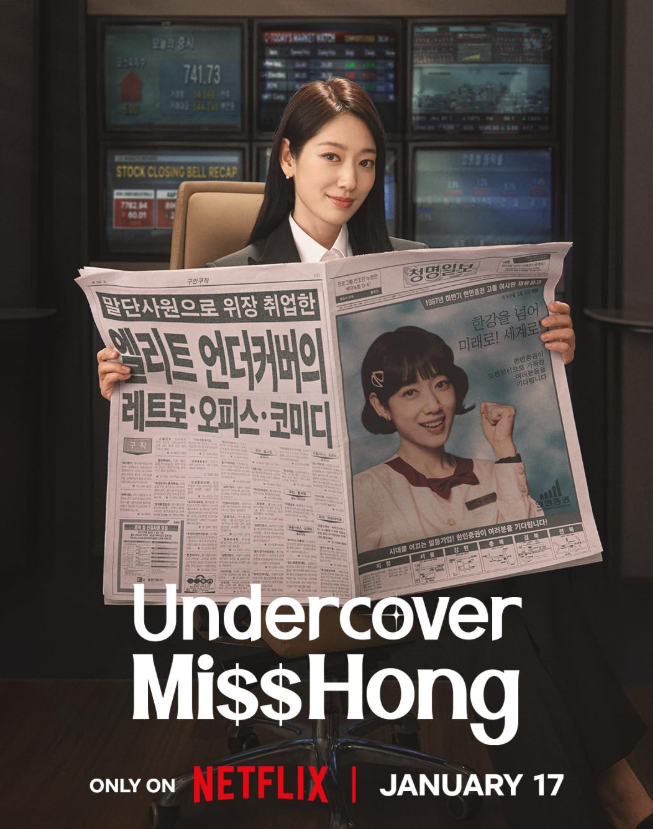
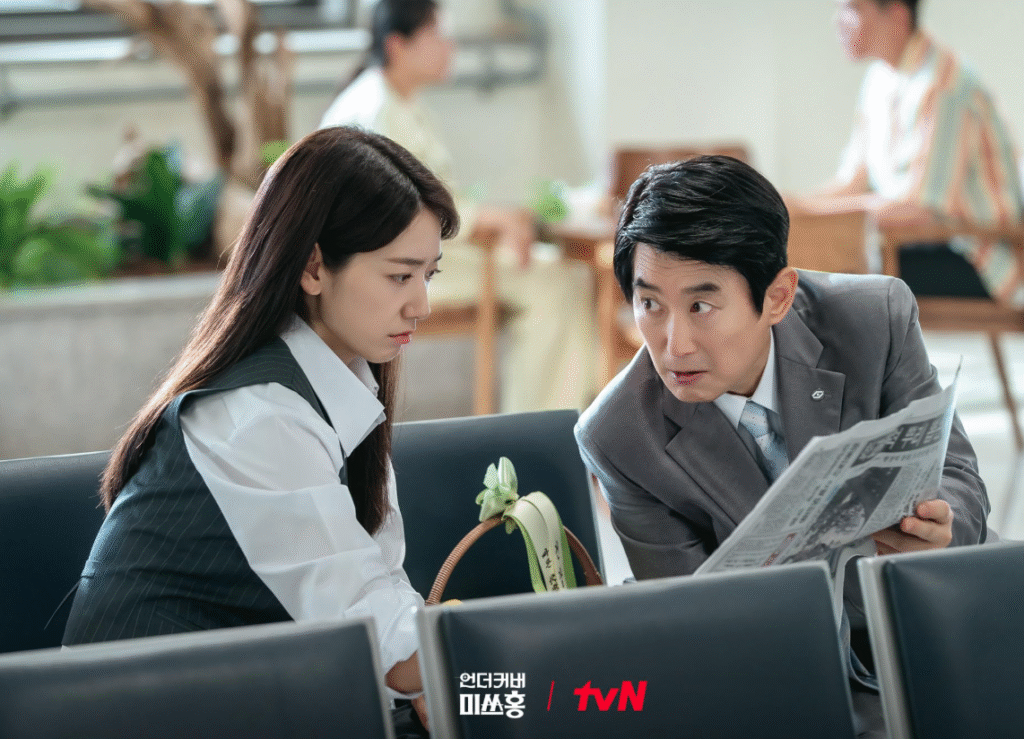
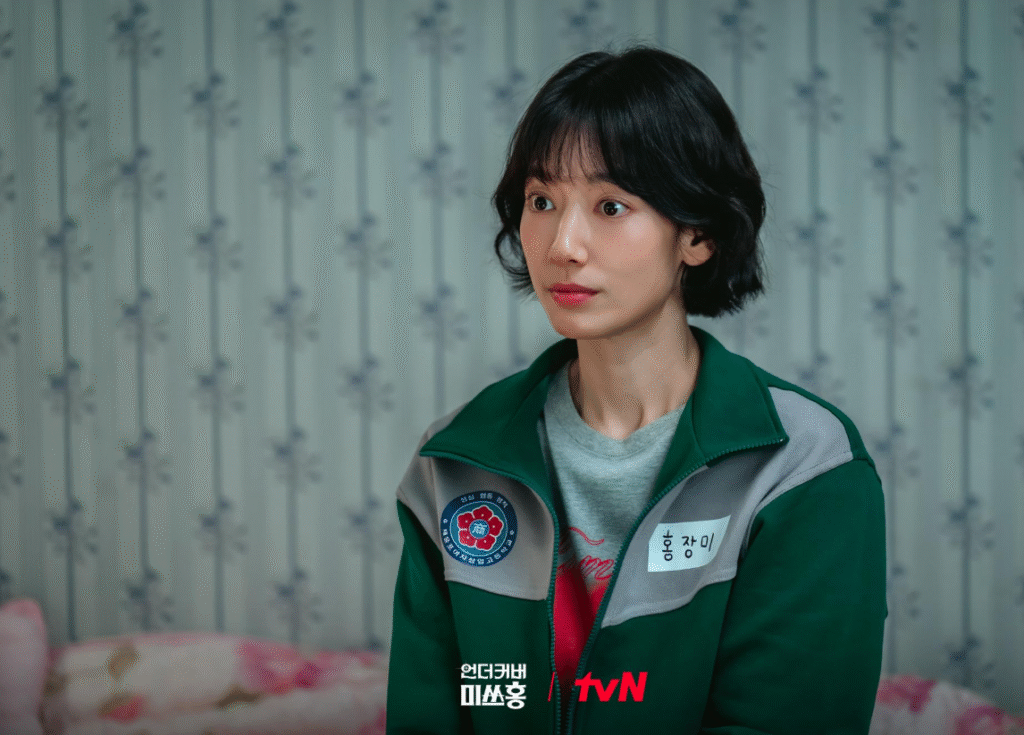
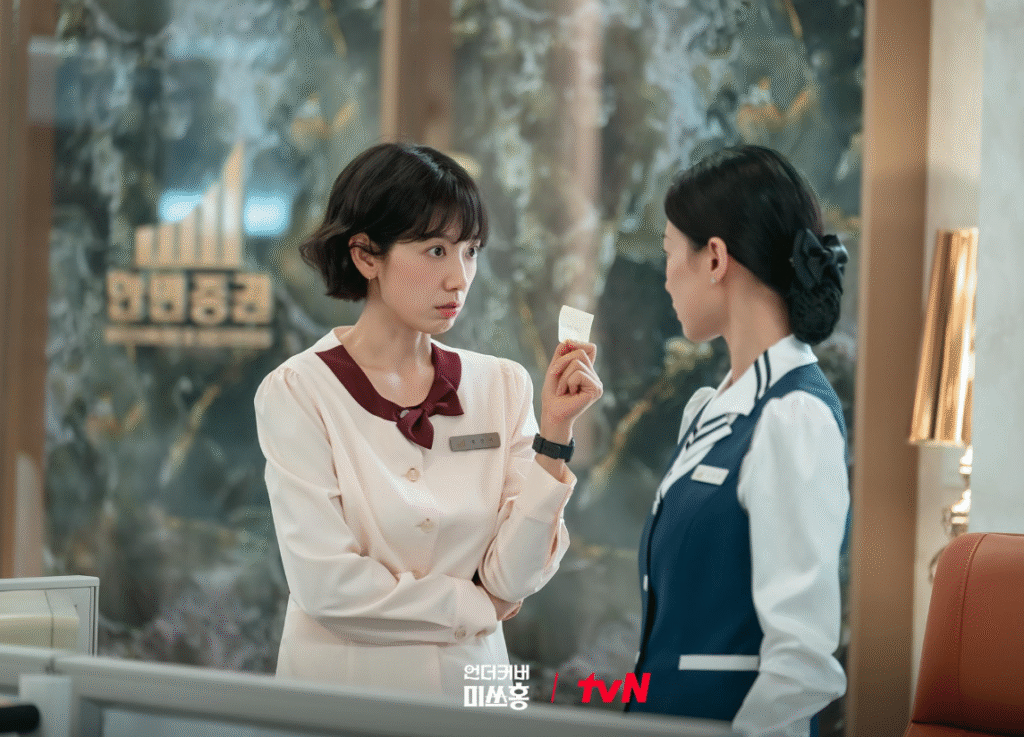
Hong Geum-bo (played by Park Shin-hye) is not an ordinary employee. She is an undercover investigator secretly planted inside the company to uncover a complex network of illegal stock manipulation and hidden slush funds tied directly to the chairman. As the episodes progress, the comedy gradually fades, replaced by a slow-burning corporate thriller where every document, every whispered conversation, and every promotion hides a potential trap.
A Protagonist Built on Endurance, Not Brilliance
Unlike many crime dramas, Undercover Miss Hong refuses to present its heroine as a confident, flawless agent.
Hong Geum-bo is constantly cornered.
She faces:
- the risk of sudden exposure,
- internal power struggles between executives,
- isolation from colleagues who unknowingly become potential threats,
- and the psychological strain of living with a fabricated identity.
Her intelligence matters, but her true strength is endurance.
This choice makes the character unusually relatable. She is not a genius detective manipulating events from above. She is a fragile individual forced to survive inside a system designed to crush inconvenient people. Each small mistake could end her career, her mission, and possibly her life.
The drama repeatedly returns to one unsettling question:
How long can an ordinary person carry the weight of the truth before breaking?
The Gradual Transformation of Tone
One of the most impressive achievements of the series is its carefully controlled tonal shift.
In the early episodes, the focus lies on workplace survival and social satire:
awkward meetings, unfair evaluations, gender politics, and office hierarchies.
In the middle section, the narrative begins to darken. Financial crimes surface. Surveillance becomes routine. The camera lingers on security rooms, confidential files, and late-night investigations.
By the later episodes, the drama fully embraces the structure of corporate noir.
The boardroom becomes more dangerous than any crime scene.
The most violent acts are not physical, but administrative: demotions, forced resignations, fabricated scandals, and silent erasures from the system.
What makes this transformation effective is its patience.
The conspiracy does not arrive suddenly. It grows naturally from small, almost invisible incidents, mirroring how corruption often operates in reality.

A Portrait of Power and Institutional Silence
At its core, Undercover Miss Hong is not about catching criminals.
It is about understanding how power protects itself.
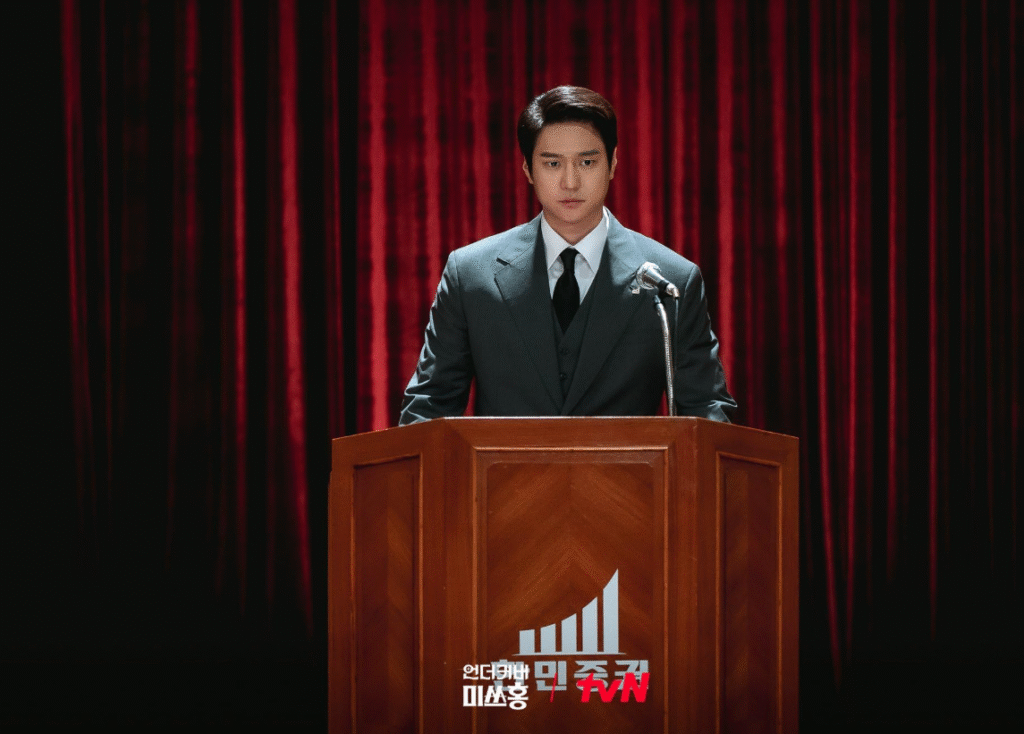
The series repeatedly shows that corruption does not survive through violence alone, but through cooperation, silence, and mutual benefit. Executives who suspect wrongdoing choose not to ask questions. Employees who discover the truth choose not to speak. Even law enforcement moves cautiously around corporate influence.
Three themes dominate the narrative:
- Power always builds its own shield.
- Whistleblowers are rarely celebrated.
- Silence is often safer than justice.
In this sense, the drama becomes less a thriller and more a social study of modern institutions.
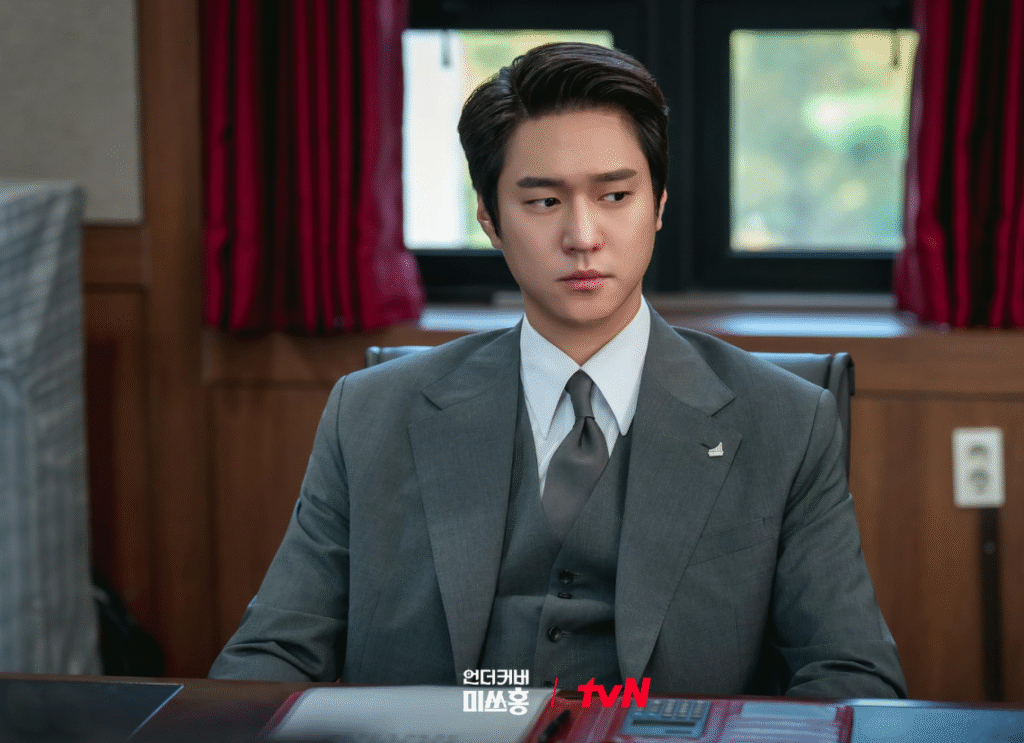
Direction and Performances
Park Shin-hye delivers one of her most restrained performances to date.
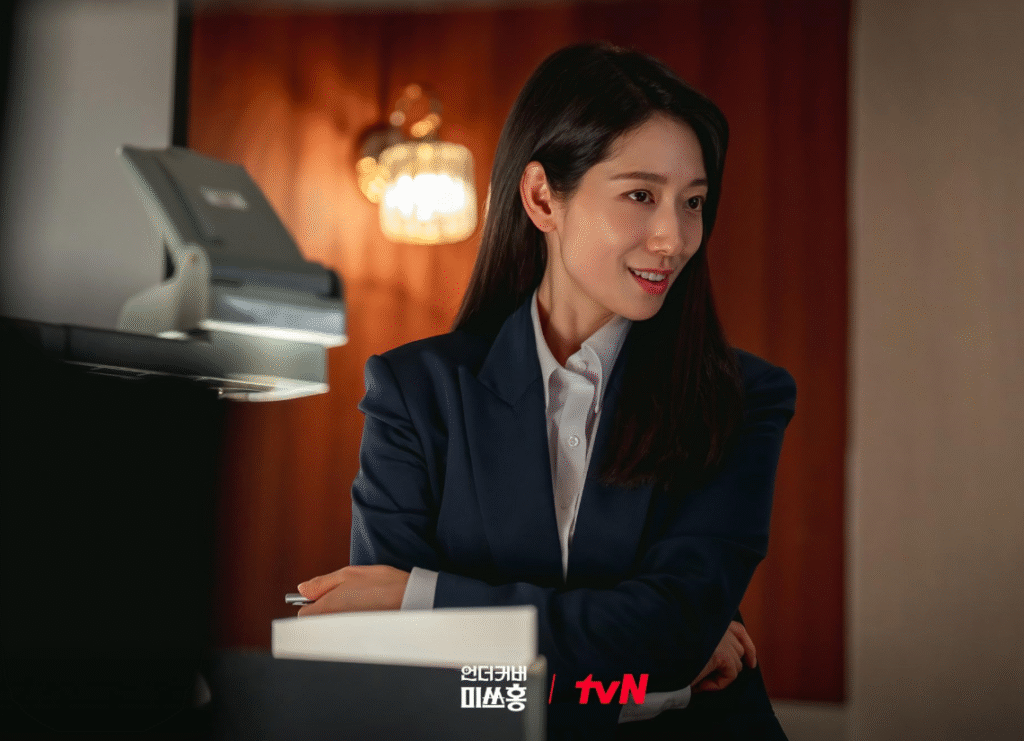
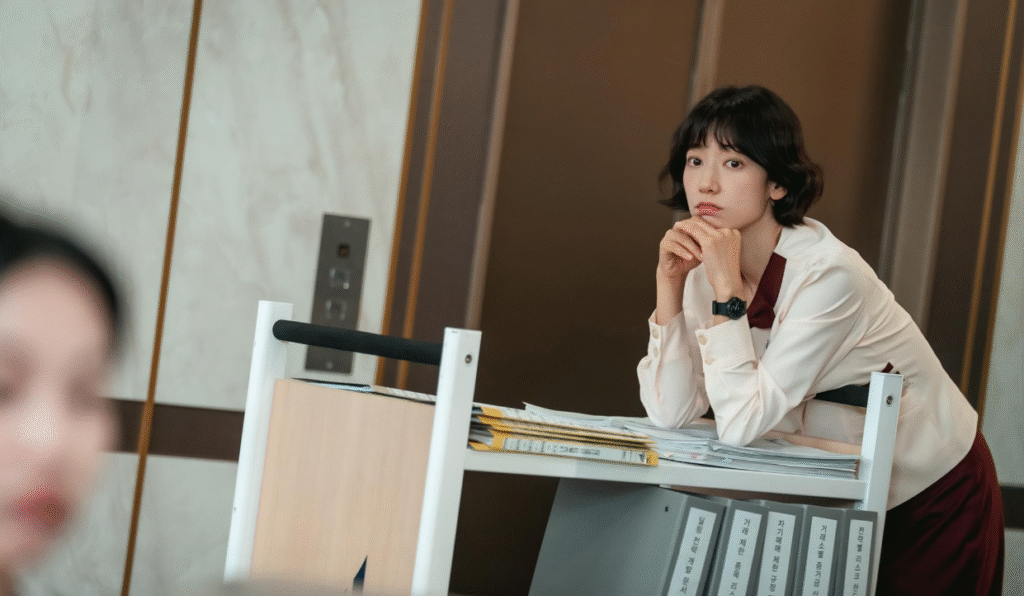
Instead of dramatic monologues, she relies on micro-expressions: hesitation before signing a document, fear hidden behind professional smiles, exhaustion slowly settling into her posture. The camera often frames her alone in wide office spaces, emphasizing her isolation inside the organization.
The supporting cast strengthens the atmosphere.
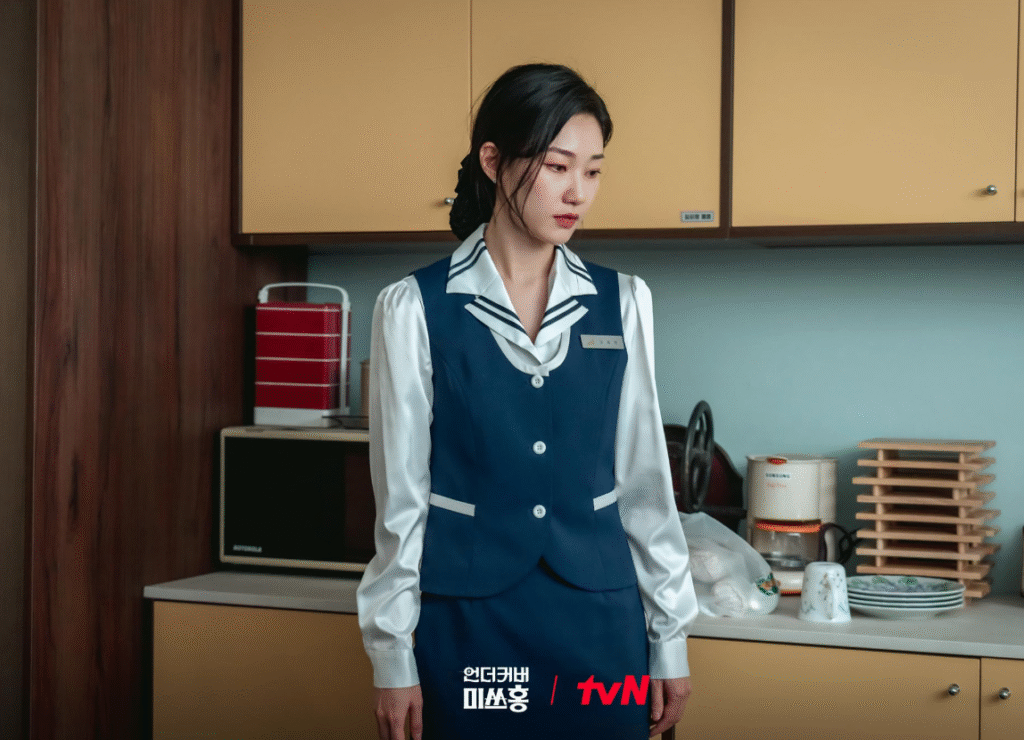
Executives are portrayed not as villains, but as calm, rational managers who speak softly while destroying lives through paperwork. This banality of evil makes the tension more disturbing.
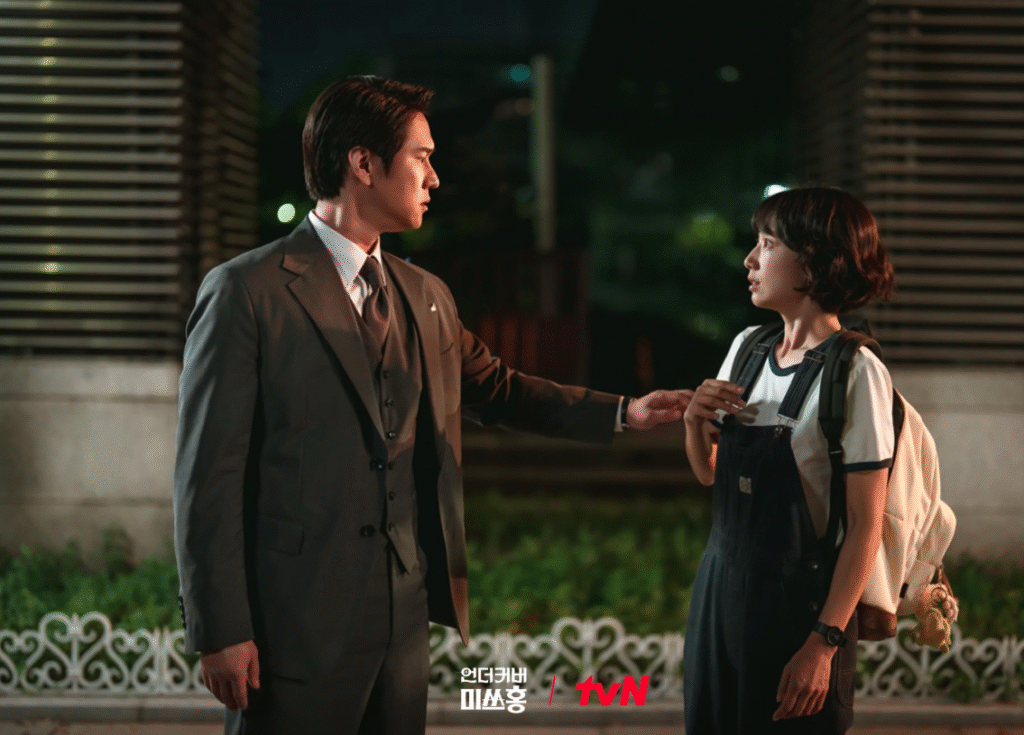
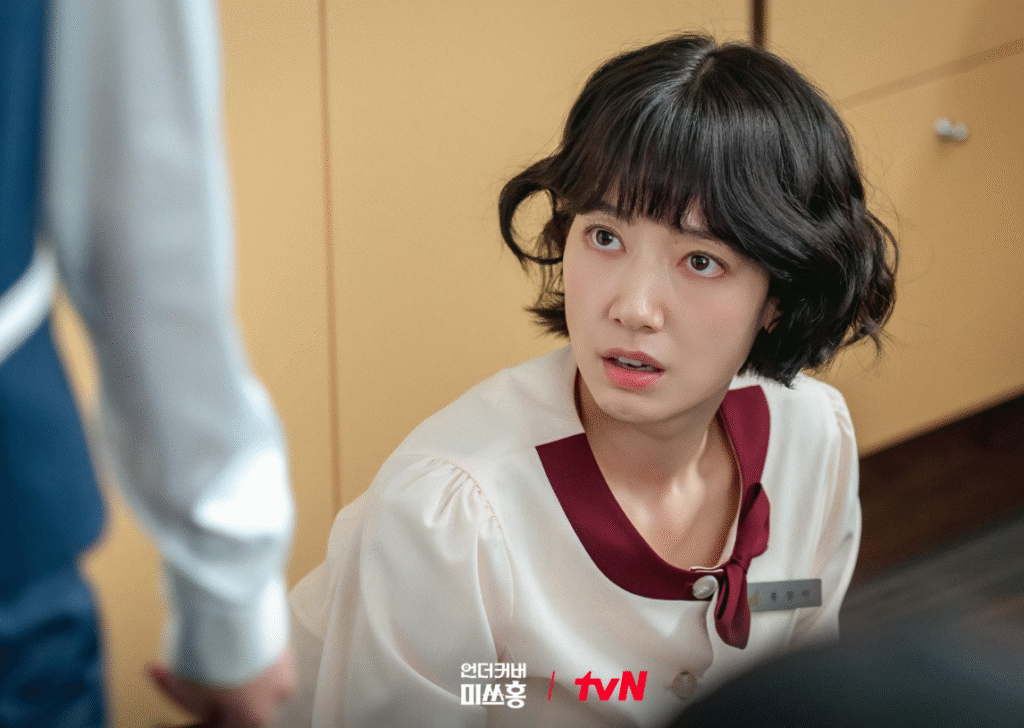
Final Verdict
Undercover Miss Hong is a rare hybrid.
It begins as a workplace comedy, transforms into a financial crime thriller, and ultimately becomes a psychological study of survival under institutional pressure. Its greatest strength lies in its restraint: the tension is quiet, the danger is invisible, and the fear feels disturbingly realistic.
For viewers interested in corporate power, undercover investigations, and character-driven thrillers, this series offers far more depth than its light beginning suggests.
Sometimes, the most dangerous place to hide is a normal office.
🔗 Official Streaming & Verified Resources
tvN Official Page — Undercover Miss Hong
https://tvn.cjenm.com/ko/undercoverMissHong/
Netflix (International Availability — if applicable)
https://www.netflix.com
🎭 Cast Profiles & Credibility Links
Park Shin-hye — Wikipedia Profile
https://en.wikipedia.org/wiki/Park_Shin-hye
Lee Duk-hwa — Wikipedia Profile
https://en.wikipedia.org/wiki/Lee_Duk-hwa
📚 Related Reviews from Go K Wave
No Tail to Tell 2026 Review | Fox Spirit Romance
https://gokwv.com/no-tail-to-tell-review/
Can This Love Be Translated? Ending Explained | Dorami’s Secret
https://gokwv.com/can-this-love-be-translated-ending-explained/
When Life Gives You Tangerines – A Powerful and Emotional Review
https://gokwv.com/when-life-gives-you-tangerines-review-ending/