
The 2018 animated The Grinch arrives with a very deliberate creative choice:
this is no longer a story about defeating a villain, but about understanding why someone chooses to stand apart from joy.
Based on the classic children’s book by Dr. Seuss, the film avoids major narrative changes. Instead, it updates the story by shifting its emotional perspective. The plot remains familiar, but the motivation behind the Grinch’s actions is reframed through the lens of loneliness, anxiety, and emotional withdrawal. In doing so, the film becomes less satirical and more reflective—an approach that feels distinctly modern.
Produced by Illumination and directed by Scott Mosier and Yarrow Cheney, the film emphasizes warmth, accessibility, and emotional safety. This is a holiday story designed to be inviting rather than confrontational.

A Grinch Shaped by Isolation, Not Villainy
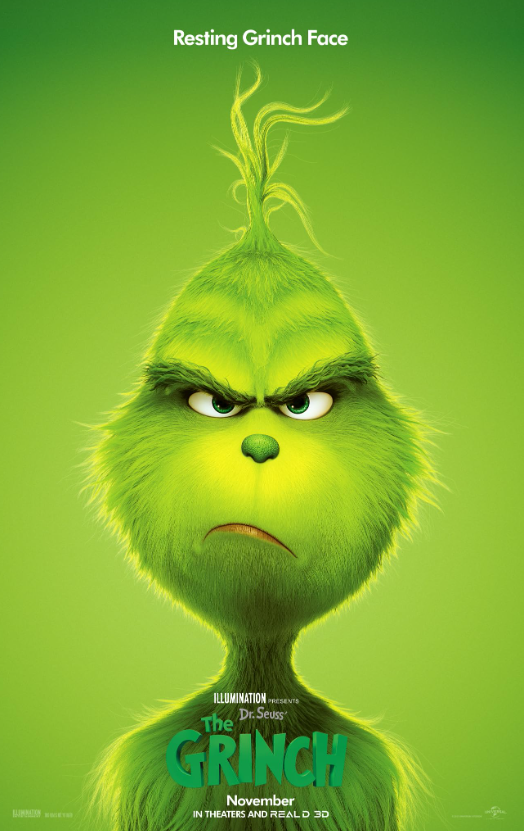
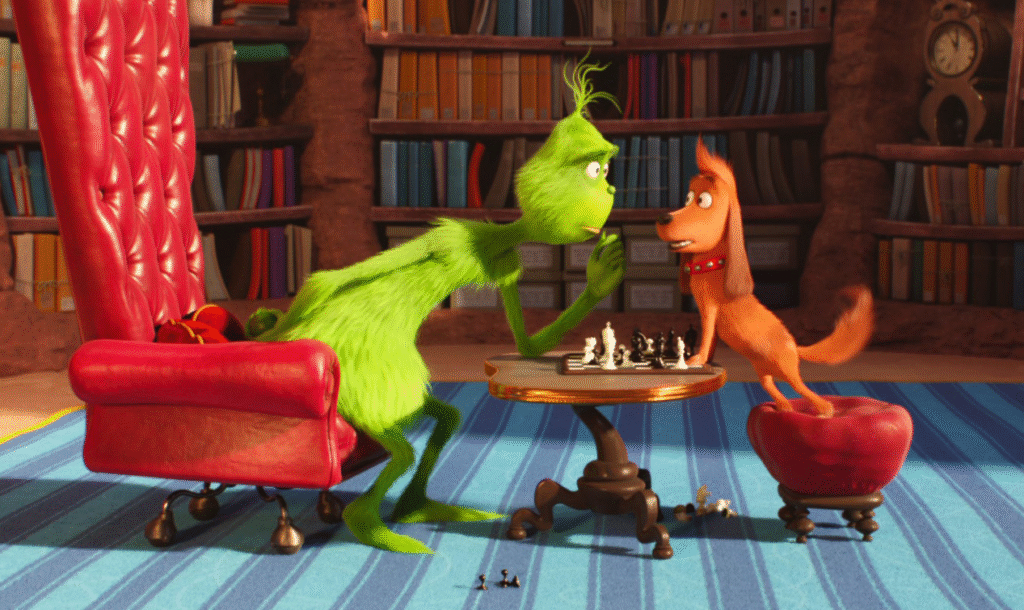
Voiced by Benedict Cumberbatch, the Grinch in this version is quieter and more restrained than his predecessors. He is sarcastic, yes, but never explosive. His anger simmers rather than erupts.
What defines him most is not cruelty, but avoidance.
This Grinch lives alone because isolation feels manageable. Christmas, with its noise, closeness, and enforced cheer, threatens that fragile sense of control. His hatred of the holiday reads less like malice and more like emotional self-defense—a way to reject the world before it can expose his vulnerability.
That distinction matters.
The film doesn’t excuse his behavior, but it explains it. In doing so, it invites empathy without demanding forgiveness too quickly. His eventual change feels earned precisely because the audience understands the emotional cost of his resistance.

Whoville and Mount Crumpit as Emotional Spaces
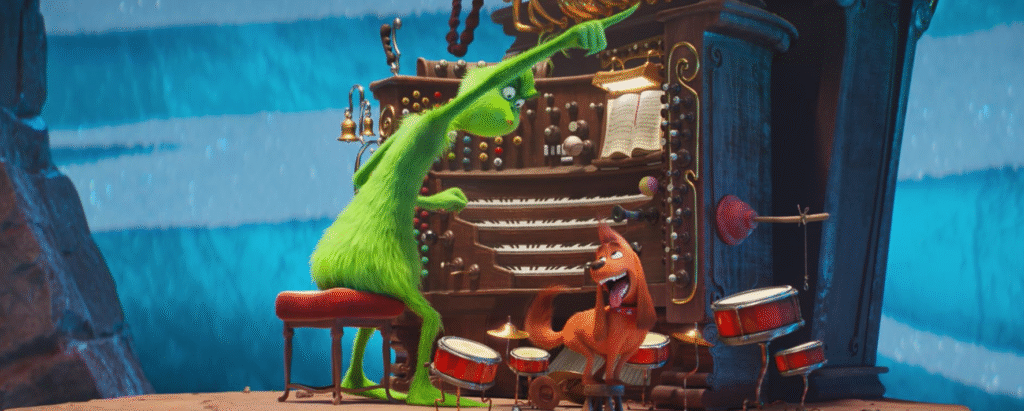
Visually, the film uses environment as emotional shorthand. Whoville is overwhelmingly cheerful—bright colors, exaggerated decorations, constant motion. It’s not just joyful; it’s overstimulating. Mount Crumpit, by contrast, is quiet, sparse, and muted.
Neither space is presented as inherently good or bad. Instead, they represent two emotional states: excess connection and extreme withdrawal. The Grinch’s journey is not about choosing one over the other, but about finding balance between solitude and belonging.
Illumination’s animation style reinforces this idea. Rounded character designs, soft lighting, and tactile textures make even difficult emotions feel approachable. The film never threatens or intimidates its audience. It reassures them that discomfort can be explored safely.

Cindy-Lou Who and Intentional Kindness
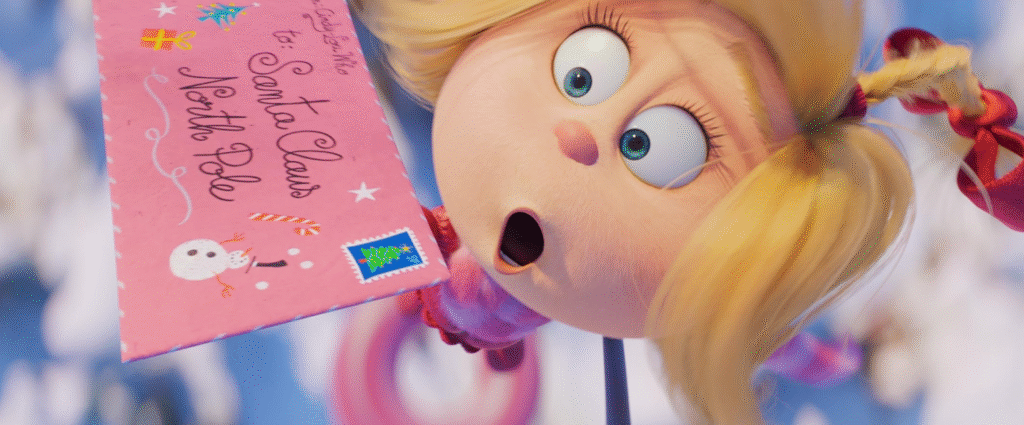
Cindy-Lou Who is given far more narrative purpose than in earlier adaptations. She is not merely innocent; she is perceptive. She notices the Grinch not as a monster, but as someone missing from the celebration.
Her kindness is active rather than accidental. She asks questions. She observes patterns. She chooses to care.
Through her, the film suggests that empathy is not naïve optimism, but attention paired with intention. This subtle shift makes her the moral anchor of the story, grounding its emotional logic.

Humor That Supports the Story
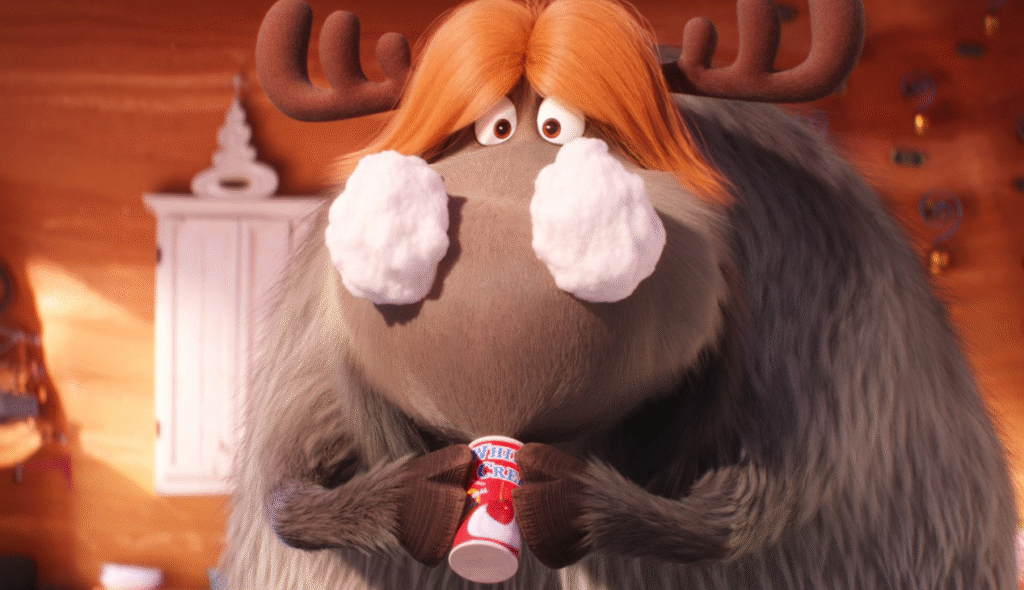
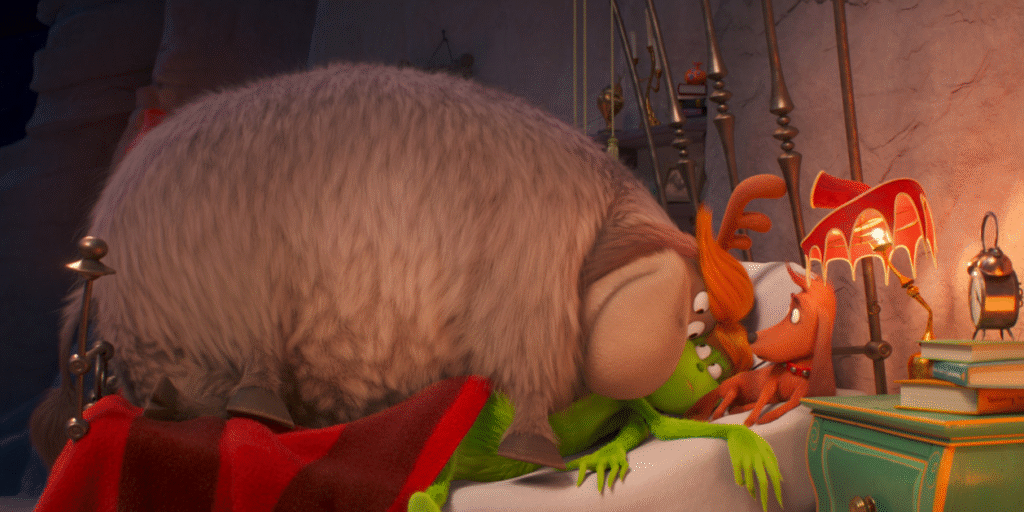
The humor in The Grinch (2018) is deliberately restrained. Max the dog provides gentle physical comedy, while the Grinch’s dry commentary offers quiet laughs. The jokes never undermine the character’s emotional arc or distract from the story’s central themes.
This is not a rapid-fire comedy designed to impress with volume.
It’s designed to comfort, making it especially effective as a repeat seasonal watch.
What This Adaptation Gains—and What It Lets Go
By softening the Grinch, the film gains emotional accessibility. Children can understand his feelings without fear, and adults can recognize patterns of withdrawal that feel uncomfortably familiar.
What it sacrifices is sharp satire. The critique of consumerism and excess remains present, but muted. This version is less interested in condemning Christmas culture and more interested in examining how people respond when joy feels exclusionary.
That trade-off feels intentional rather than accidental.


Final Verdict
The Grinch (2018) reflects a cultural shift in how stories treat antagonists. Instead of asking, “How do we stop this person?” it asks, “What happened that made them this way?”
It suggests that transformation doesn’t come from humiliation or defeat, but from recognition and connection. In a season often defined by noise and obligation, the film’s quiet empathy feels surprisingly resonant.
This may be the softest version of the Grinch to date—but it is also one of the most emotionally honest.

🔗 Official Streaming & Production Resources
- Netflix – The Grinch (2018) Official Streaming Page
https://www.netflix.com/ - IMDb – The Grinch (2018) | Full Cast, Ratings & Trivia
https://www.imdb.com/title/tt2709692/
🎄 Recommended Reads from Go K Wave
- MY SECRET SANTA │ 7 Reasons You’ll Love This Netflix Holiday Romance
https://gokwv.com/my-secret-santa-review/ - Supergirl: Woman of Tomorrow — A Ruthless Take on Survival
https://gokwv.com/supergirl-woman-of-tomorrow-review/ - Fallout full Review — The Apocalypse Was Never an Accident
https://gokwv.com/fallout-full-spoiler-review/