Some revege stories are loud.
The Glory is devastatingly quiet.
Released globally on Netflix in two parts, this Korean psychological thriller stunned audiences not because of explosive action scenes—but because of its restraint. Written by Kim Eun-sook, a screenwriter long associated with romance and glossy melodrama, The Glory marked a dramatic creative shift. Instead of love confessions and destiny-driven relationships, we are given something colder, sharper, and infinitely more unsettling: a revenge built on patience.
And patience, here, is terrifying.


The Architecture of Revenge
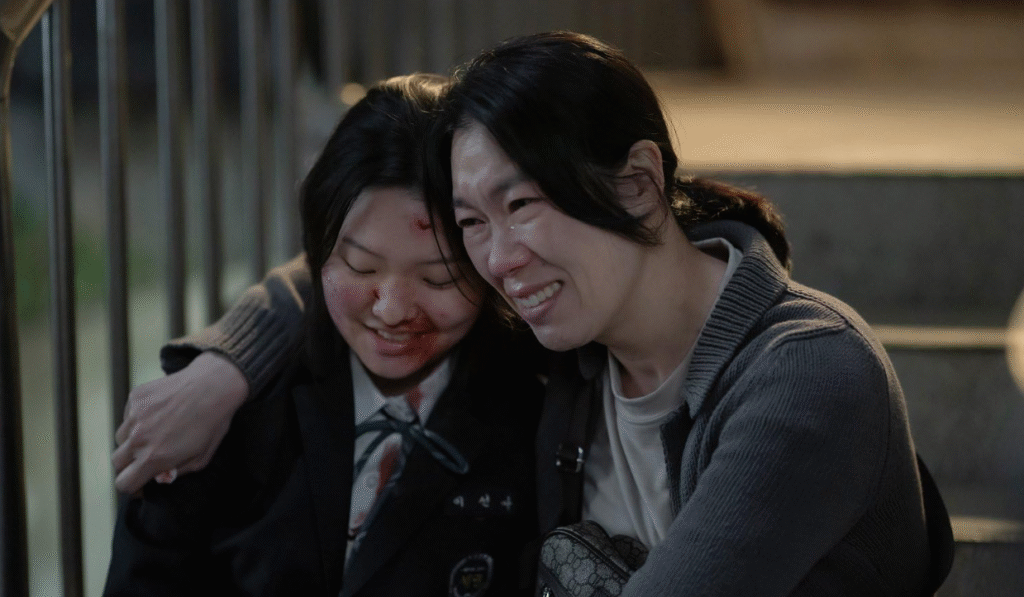
Moon Dong-eun, played with chilling precision by Song Hye-kyo, was brutally bullied in high school. The violence depicted in the series feels disturbingly grounded. It does not romanticize trauma. It forces the audience to sit with it.
Years later, Dong-eun does not return seeking catharsis.
She returns seeking structure.
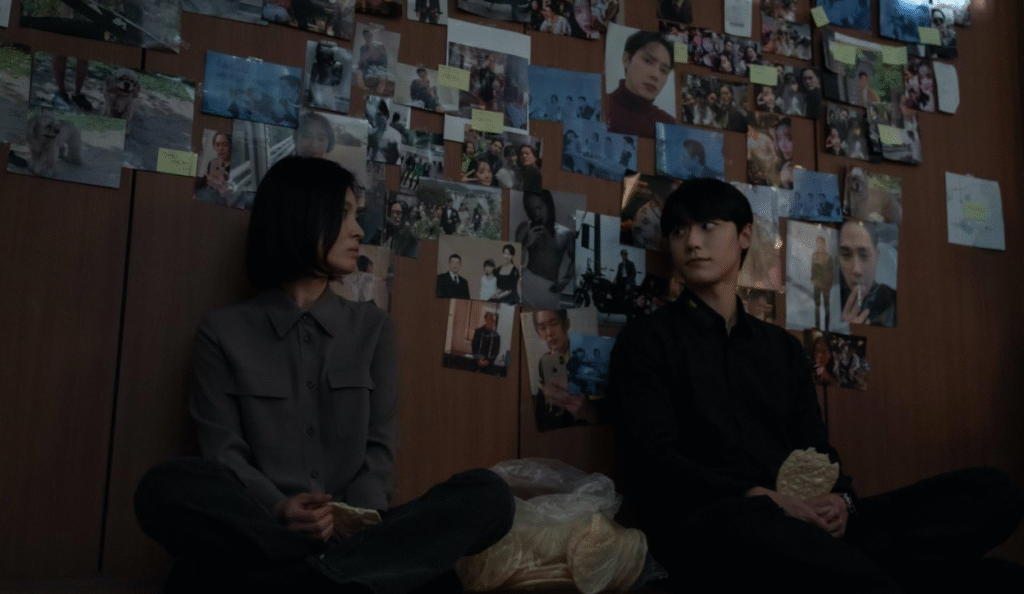
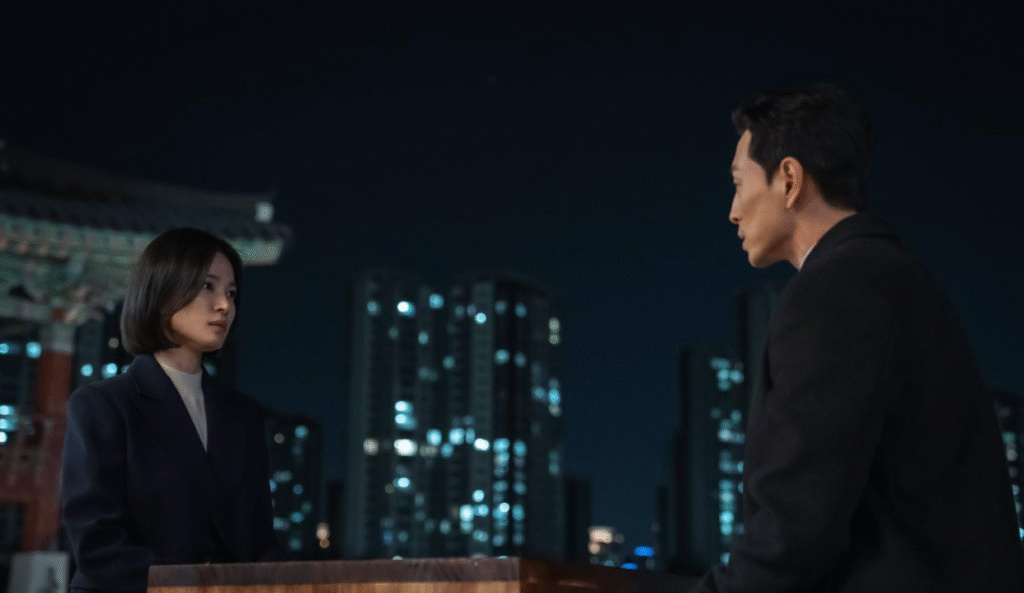
Her revenge is not impulsive rage—it is engineering. She carefully studies her former tormentors, infiltrates their social circles, and slowly positions herself inside their world. The most symbolic move? Becoming the homeroom teacher of her main abuser’s daughter.
This is not about screaming confrontations.
It is about dismantling lives from within.
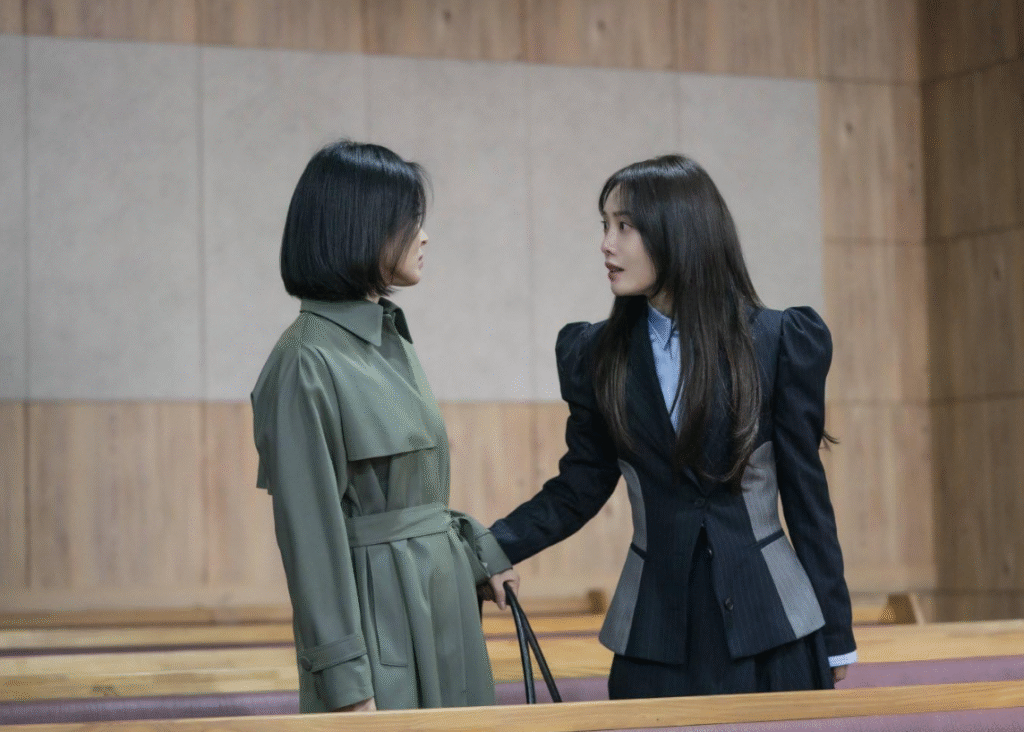
Every silence between Dong-eun and Park Yeon-jin carries more tension than any physical fight could. Every small manipulation feels like a calculated chess move. Watching the plan unfold is less about surprise and more about inevitability.

Song Hye-kyo’s Career-Defining Performance
Song Hye-kyo’s transformation is one of the series’ greatest strengths. She strips away warmth, charisma, and outward vulnerability. Dong-eun is emotionally contained—almost frozen. Yet beneath that stillness is constant calculation.
Her performance is minimal, but deeply expressive. A flicker in her gaze often says more than a monologue. This restraint amplifies the psychological intensity of the drama. She does not break down. She does not scream. She waits.
And the waiting becomes the drama.

A Villain That Feels Real
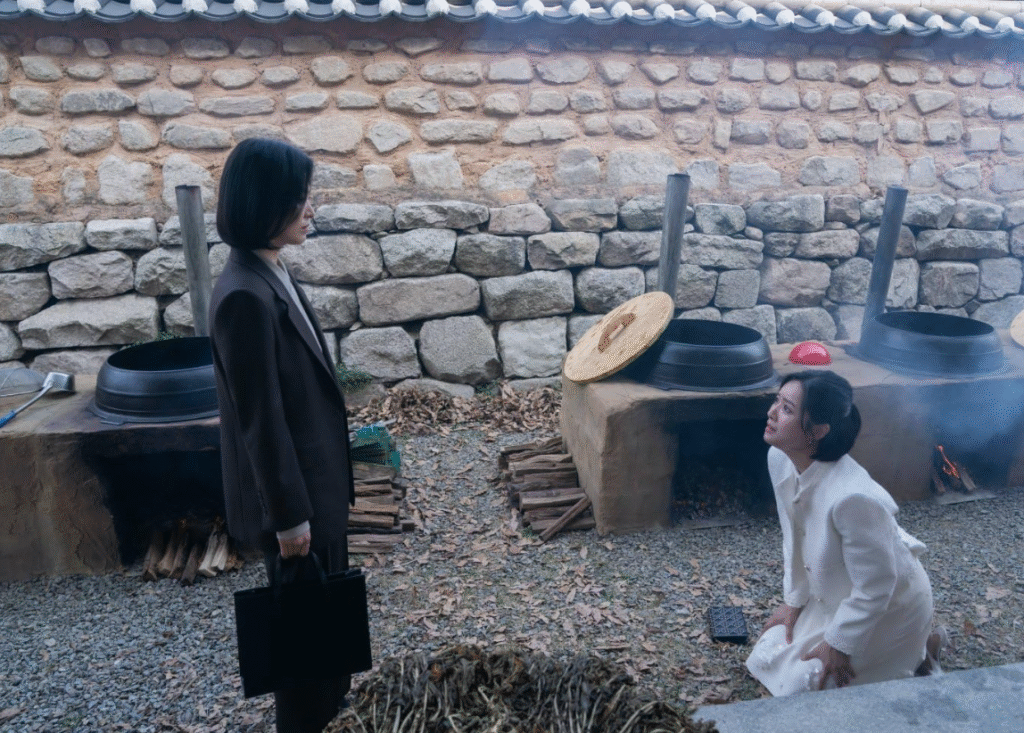
Lim Ji-yeon’s portrayal of Park Yeon-jin is equally unforgettable. Yeon-jin is not written as a caricature of evil. She is privileged, socially powerful, and frighteningly secure in her entitlement.
She does not see herself as cruel.
She sees herself as superior.
That psychological blindness makes her downfall all the more compelling. The series subtly explores how systems of wealth, reputation, and influence protect people like Yeon-jin. Revenge here is not only personal—it challenges a structure that allowed the abuse to thrive.
More Than Just Retribution
What elevates The Glory beyond a typical revenge thriller is its moral ambiguity. The show quietly asks:
- Does revenge heal trauma, or prolong it?
- Is justice meaningful if achieved outside the legal system?
- What remains of a person who dedicates their entire life to retaliation?
Dong-eun’s journey is not empowering in a conventional sense. Her revenge costs her emotional growth, relationships, and years of her life. Even as her plan succeeds, the victory feels hollow—haunting rather than triumphant.
There is no celebration.
There is only consequence.

Cultural Impact and Legacy
Beyond entertainment, The Glory ignited real conversations about school violence in South Korea and the culture of silence that often surrounds it. The drama’s unflinching depiction of abuse resonated with viewers who had long felt unheard.
It proved that mainstream K-dramas could tackle deeply uncomfortable social realities while maintaining global appeal. Its success was not built on spectacle—but on psychological precision.
Final Verdict
The Glory is not an easy watch, nor is it meant to be. It is deliberate, unsettling, and emotionally rigorous. It rejects simple resolutions and instead leaves viewers with lingering discomfort.
But that discomfort is precisely what makes it powerful.
If you are looking for romance or light escapism, this is not your drama.
If you are ready for a meticulously crafted psychological revenge story that stays with you long after the credits roll, The Glory stands as one of the most defining Korean dramas of its era.


🔗 Official Drama & Reference Resources
The Glory — IMDb
Full cast, episode guide, ratings & production details
https://www.imdb.com/title/tt21344706/
Netflix — The Glory Official Streaming Page
Watch the complete series (availability varies by region)
https://www.netflix.com/
🌍 More Reviews from Go K Wave
Bloodhounds Review – Everything You Need to Know About Netflix’s Brutal Thriller
https://gokwv.com/bloodhounds-review/
Alchemy of Souls Review – Epic Fantasy, Romance, and Magic Explained
https://gokwv.com/alchemy-of-souls-review/
The Art of Sarah Review – Identity, Art, and Psychological Manipulation Explored
https://gokwv.com/the-art-of-sarah-review-ending-explained/