

Introduction
When Parasite premiered in 2019, few people expected it to completely reshape how the world looked at Korean cinema.
Directed by Bong Joon-ho, the film quickly evolved from a critically acclaimed thriller into a global cultural phenomenon. It went on to win the Palme d’Or at the Cannes Film Festival and later made history at the Academy Awards, becoming the first non-English language film to win Best Picture.
But what makes Parasite so powerful is not just its awards. It is the film’s ability to blend dark comedy, social satire, and psychological suspense into a story that feels both wildly entertaining and deeply uncomfortable.
At its heart, Parasite is a story about class, survival, and the invisible walls that divide society.
Plot Overview
The story begins with the struggling Kim family, who live in a cramped semi-basement apartment in Seoul.
Unemployed and barely getting by, they survive by folding pizza boxes and searching for free Wi-Fi signals from nearby cafés.
Their situation changes when the son, Ki-woo, is offered a job tutoring the daughter of a wealthy family.
That family is the Park household, who live in a stunning modern mansion designed by a famous architect.
What starts as a simple tutoring job soon turns into something much bigger.
One by one, members of the Kim family cleverly infiltrate the Park household by securing positions as employees — tutor, art therapist, driver, and housekeeper — all while hiding their true relationship from their employers.
For a while, the plan works perfectly.
Until a shocking discovery in the house reveals that they are not the only people hiding secrets there.


A Perfect Blend of Genres
One of the most fascinating aspects of Parasite is how it constantly shifts tone.
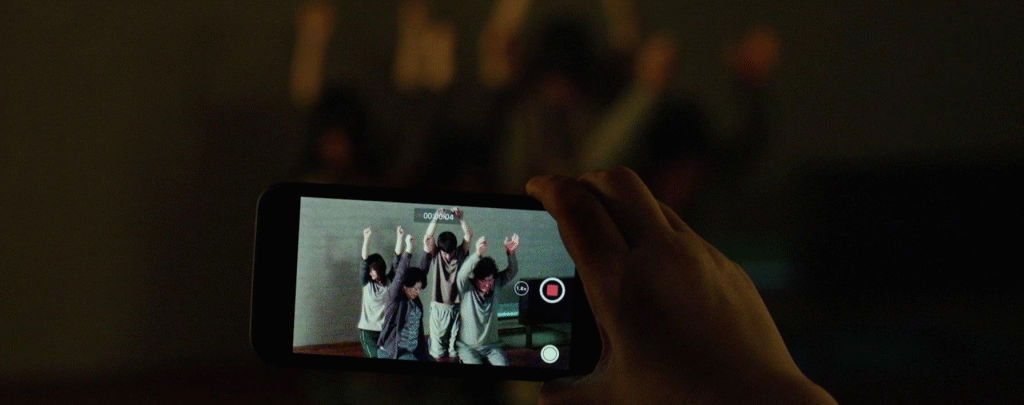
Dark Comedy
The first half of the film plays almost like a clever social comedy. Watching the Kim family strategically take over the Park household is both funny and strangely satisfying.
Their schemes are elaborate but grounded in desperation.
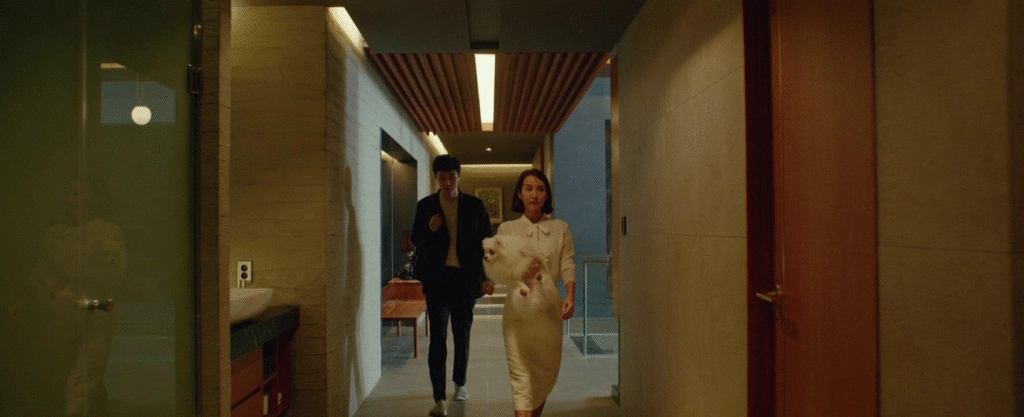
Thriller
Halfway through the film, the tone shifts dramatically.
What once felt like a playful con game becomes tense and unpredictable as hidden secrets begin to surface.
The story transforms into a psychological thriller where every character is suddenly vulnerable.

Social Satire
Bong Joon-ho uses the story to explore class inequality in a striking visual way.
The Kim family literally lives below ground, while the Park family lives high above the city in a luxurious house filled with light and space.
Even rain carries different meanings for each family. For the wealthy, it is just weather. For the poor, it can be a disaster.

Symbolism and Hidden Meaning
Few modern films use symbolism as effectively as Parasite.
The House
The Park family’s house is more than just a setting. It represents the rigid social structure separating classes.
Each level of the house — basement, living area, upper floors — reflects a different place in the hierarchy.
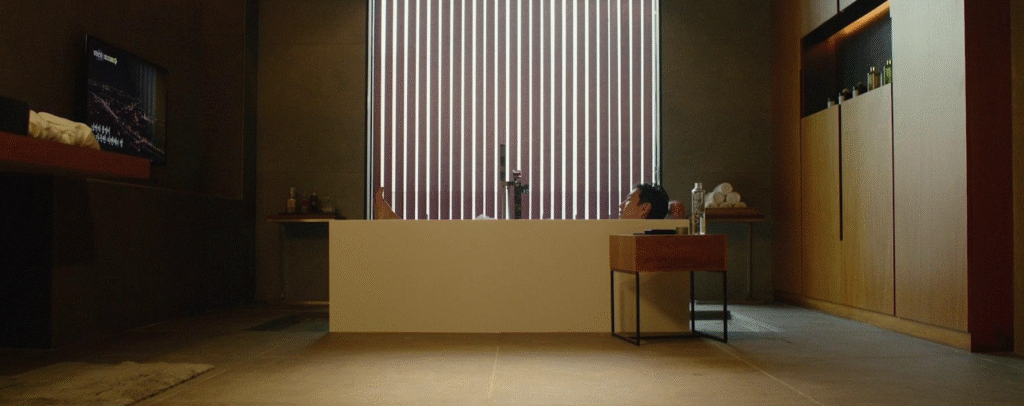
The Scholar’s Stone
The stone gifted to the Kim family symbolizes hope for wealth and upward mobility. But as the story unfolds, it becomes clear that the promise of prosperity may be heavier than expected.
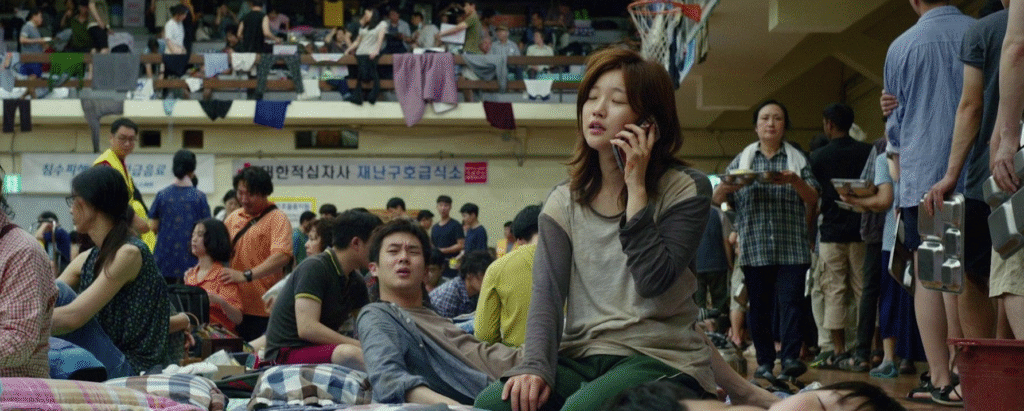
The Smell
One of the film’s most uncomfortable motifs is the idea of smell.
The wealthy characters repeatedly notice a scent associated with poverty — something subtle but impossible to hide.
It becomes a painful reminder that class differences often reveal themselves in ways people cannot control.

Performances and Direction
The ensemble cast delivers extraordinary performances across the board.
The actors portraying both families bring complexity to characters who could easily have been stereotypes. Instead, the film treats every character with nuance.
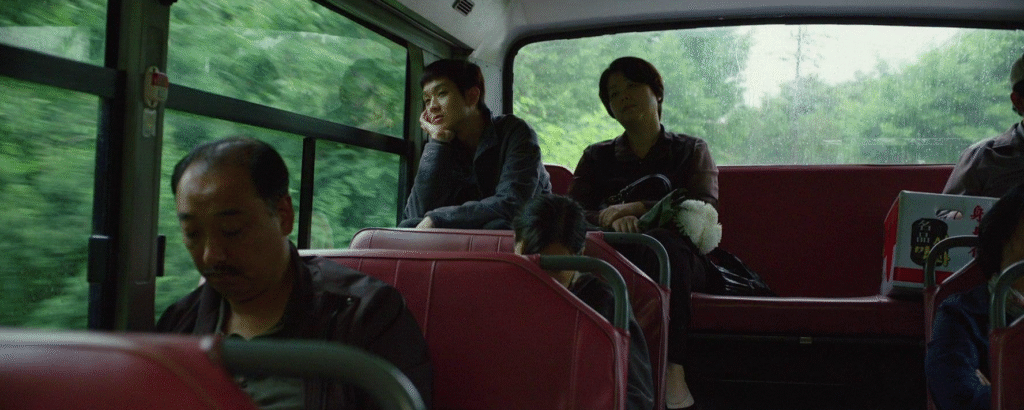
Visually, Bong Joon-ho’s direction is meticulous. Every shot feels intentional, from the symmetrical framing of the mansion to the chaotic flood scenes that reshape the story’s emotional tone.

Why Parasite Became a Global Phenomenon
The film resonated worldwide because its central theme is universal.
Economic inequality, social mobility, and the frustration of feeling trapped within a system are experiences shared across cultures.
By wrapping these ideas inside a gripping and unpredictable story, Parasite managed to speak to audiences far beyond Korea.


Final Thoughts
Parasite is not just one of the best Korean films ever made — it is one of the most important films of the 21st century.
With its masterful storytelling, unforgettable characters, and razor-sharp social commentary, the film proves that great cinema can entertain while also forcing audiences to confront uncomfortable truths about society.
And once the final scene fades out, one haunting question remains:
In a world built on inequality, who is really the parasite?


🔗 Official Film & Reference Resources
Parasite — IMDb
https://www.imdb.com/title/tt6751668/
Parasite — Official Distributor Page
https://www.cj-entertainment.com/
🌍 More Reviews from Go K Wave
The Glory Review & Ending Explained
https://gokwv.com/the-glory-review-psychological-revenge/
Bloodhounds Review – The Brutal Truth About Netflix’s Darkest Action Thriller
https://gokwv.com/bloodhounds-review/
Mickey 17 Review: The Strange Sci-Fi Film That Stays With You
https://gokwv.com/mickey-17-movie-review/