Civilization Didn’t End. It Was Rebranded.
A Story That Was Always About Control
From the first episode, Fallout makes one thing painfully clear:
the nuclear apocalypse was never the real catastrophe.
The real disaster was who survived, who controlled the narrative, and who decided the rules afterward.
By placing the story firmly within the official Fallout canon—but refusing to retell a specific game—the series earns its freedom. This is not fan service for nostalgia’s sake. It is a deliberate continuation of Fallout’s core thesis: power outlives morality.


Lucy: Innocence as a Weapon
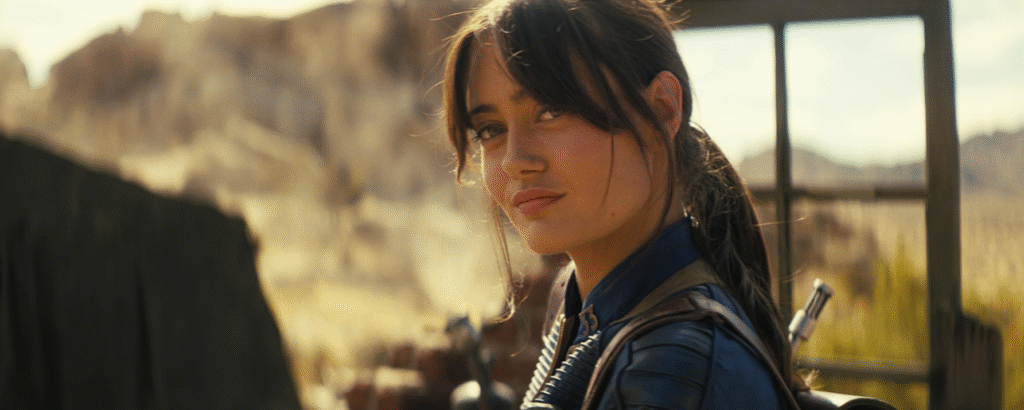
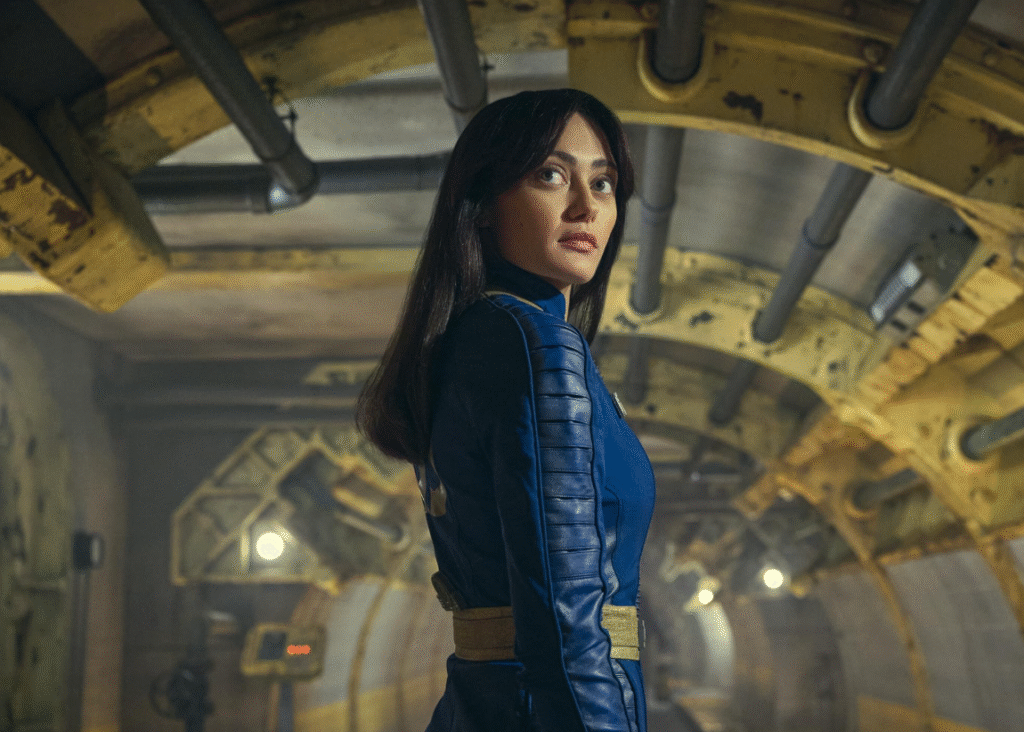
Lucy begins as a near-parody of Vault optimism—polite, rule-abiding, almost painfully sincere. But the brilliance of her arc is that the show never mocks her for it.
Instead, her journey reframes innocence as an untested ideology.
Each step outside the Vault strips away a comforting lie:
- The surface is not chaos—it has structure.
- Survivors are not savages—they are adaptive.
- Violence is not random—it is often inherited.
By the time Lucy confronts the truth about Vault-Tec and her own Vault’s purpose, she is no longer “corrupted.”
She is educated.
Her final choices are not about survival—they are about what kind of civilization deserves to continue.

The Ghoul: Fallout’s Moral Core
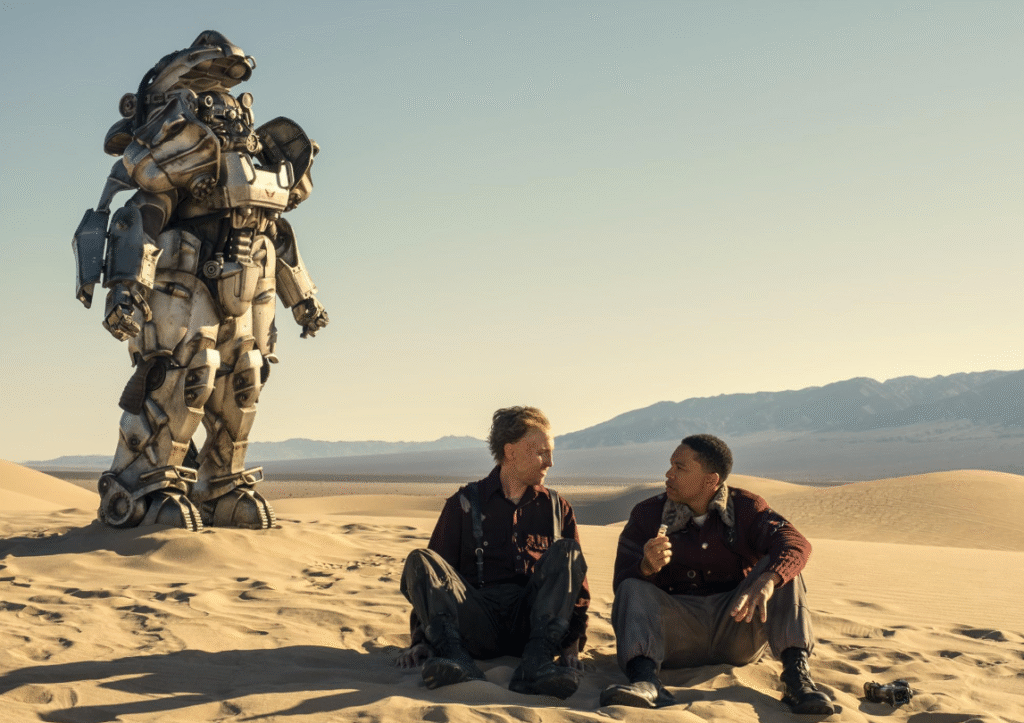
Walton Goggins’ Ghoul is not just the breakout character—he is the show’s philosophical anchor.
Once a patriotic actor selling Vault-Tec propaganda, he becomes living proof of Fallout’s cruelest irony:
those who believed the lie longest suffer the most.
His immortality is not power.
It is punishment.
The show resists romanticizing him. His brutality is real, his cruelty earned. Yet every cynical act carries memory weight—the audience never forgets who he used to be, or why he hates what the world became.
In many ways, The Ghoul understands Fallout better than anyone else:
“The world didn’t end. It just stopped pretending.”

Vault-Tec: The True Villain Revealed
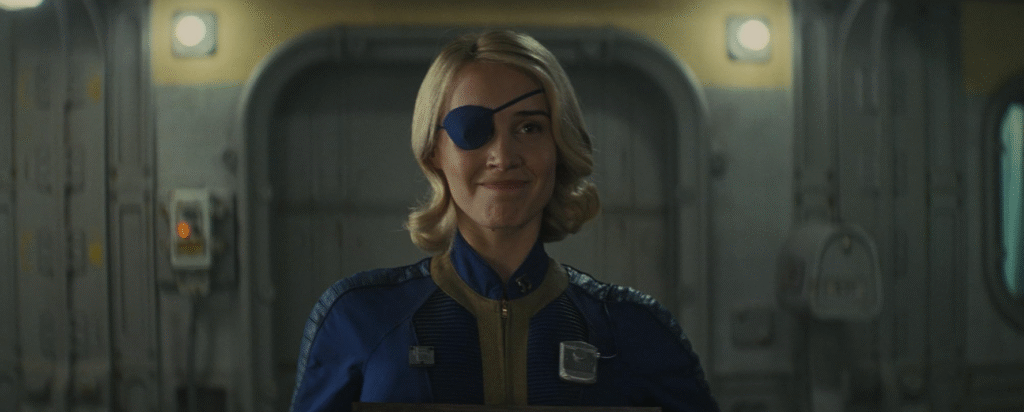
The biggest spoiler—and the most important—is the confirmation that Vault-Tec actively engineered the apocalypse.
This revelation doesn’t cheapen the Fallout mythos. It completes it.
Vaults were never shelters.
They were laboratories.
Every Vault experiment represents a question:
- What happens when authority is absolute?
- What happens when consent is removed?
- What happens when survival becomes data?
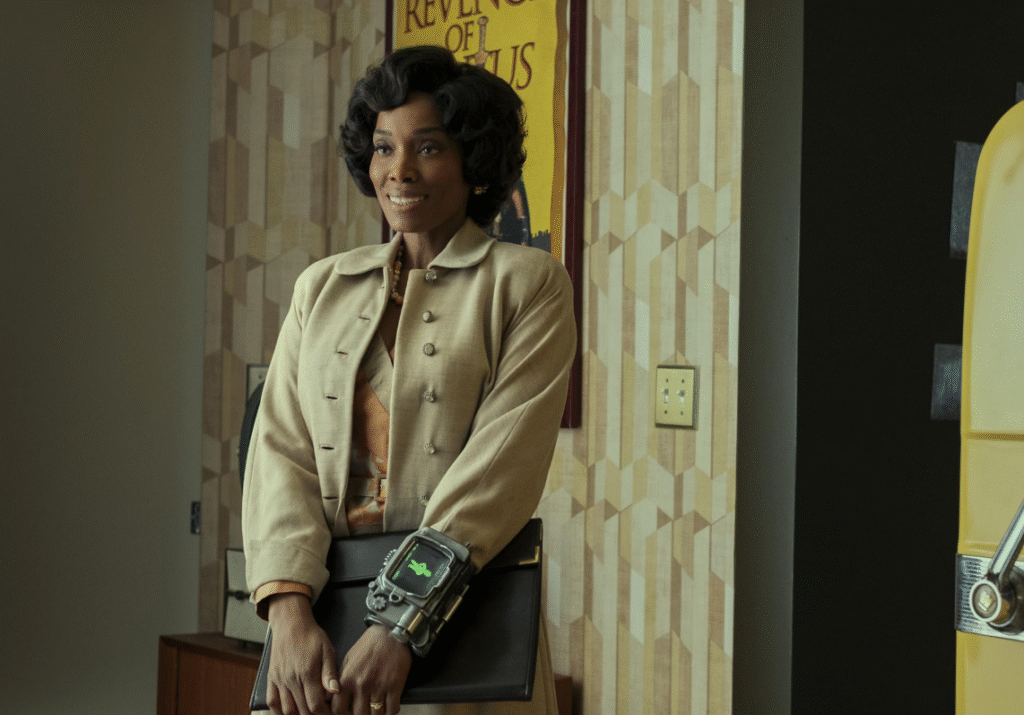
The show’s restraint here is key. Vault-Tec executives are not cartoon villains. They are smiling, rational, and terrifyingly reasonable. Their crime was not malice—it was confidence.
They believed humanity could be optimized.
They were wrong.

Power Armor, Brotherhood, and the Illusion of Order
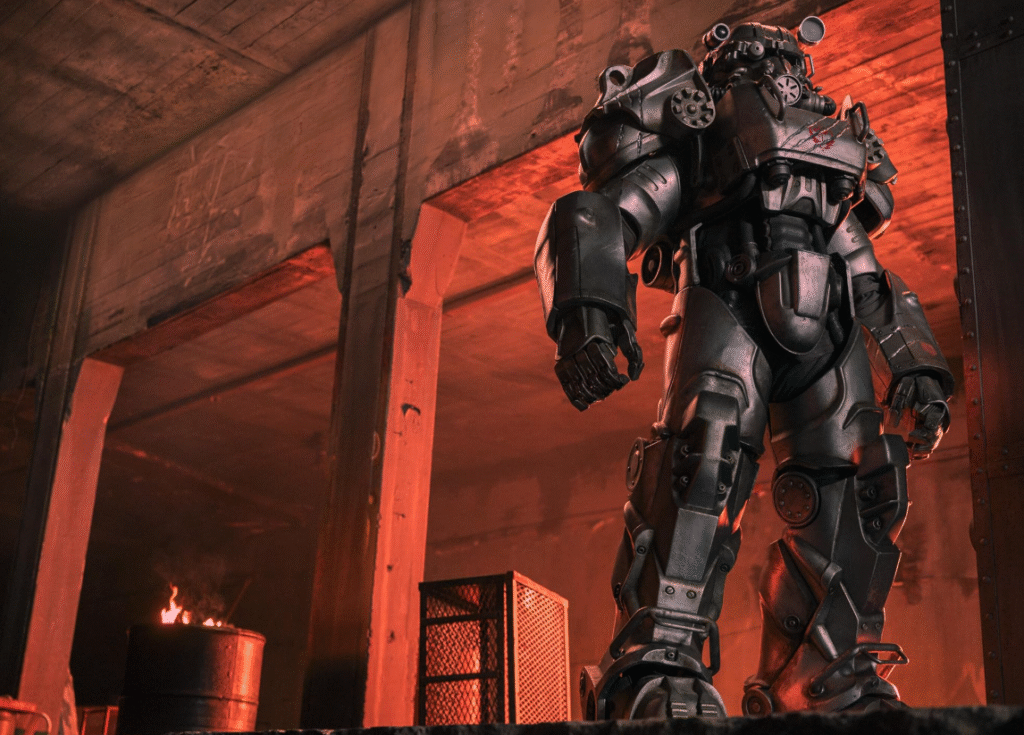
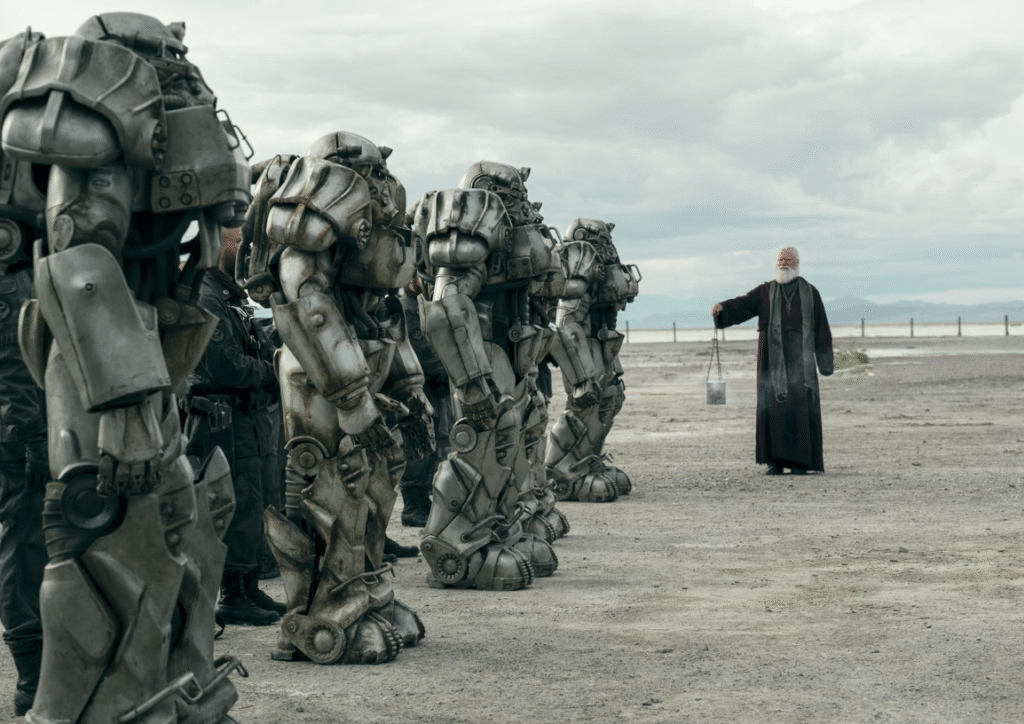
The Brotherhood of Steel is depicted with brutal honesty. Their armor is impressive. Their discipline rigid. Their ideology hollow.
They preserve technology, not people.
They protect artifacts, not futures.
By stripping away heroic framing, the series exposes the Brotherhood as another failed institution—obsessed with control under the guise of protection.
In Fallout, uniforms do not equal morality.

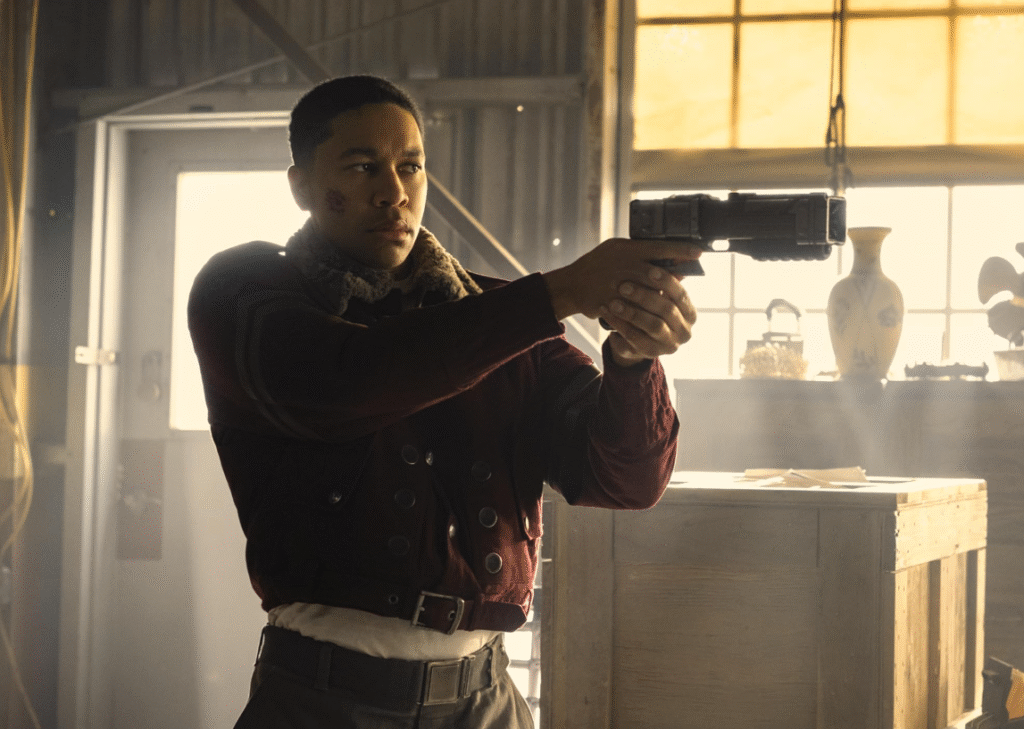
Tone: Comedy as a Survival Mechanism
The show’s humor is not decoration. It is thematic.
Fallout has always understood that laughter is how civilizations deny collapse. The cheerful music, bright colors, and absurd violence are coping strategies—both for characters and viewers.
Without humor, the world would be unbearable.
With it, the horror becomes comprehensible.
The Ending: No Reset Button
The final episodes refuse a comforting resolution.
There is no rebuilt society.
No restored order.
No promise that things will be “better.”
What Fallout offers instead is more unsettling:
The future belongs to whoever understands the past without lying about it.
Lucy walks forward with open eyes.
The Ghoul continues, burdened but honest.
Vault-Tec’s shadow still looms.
The wasteland remains.
And that is the point.
Final Verdict
Fallout succeeds because it does not misunderstand its source material.
This is not a story about nuclear war.
It is a story about systems that survive consequences.
By embracing moral ambiguity, institutional critique, and character-driven tragedy, the series becomes one of the strongest video game adaptations ever made—not because it imitates the games, but because it understands them.
References & Further Reading
- Amazon Prime Video — Fallout Official Page
https://www.primevideo.com - Bethesda — Fallout Canon & Lore
https://fallout.bethesda.net
Recommended Articles from Go K Wave
5 DARK REASONS WAKE UP DEAD MAN IS THE MOST UNSETTLING KNIVES OUT YET (2025)
https://gokwv.com/wake-up-dead-man-a-knives-out-review/
The Seduction — A Love Story That Was Never About Love
https://gokwv.com/the-seduction-review-love-power-control/
IT Welcome to Derry Review — How Evil Builds Over Time
https://gokwv.com/it-welcome-to-derry-season-1-review/