Netflix’s live-action adaptation of Cashero breathes new life into Team Befar’s original webtoon—
a story built on a deceptively silly premise that blossoms into a surprisingly grounded superhero narrative.
The show doesn’t simply ask “What if money gave you power?”
Instead, it dives into the emotional weight of that question:
What happens when every heroic choice leaves your wallet—and life—emptier than before?
Through that lens, Cashero becomes less of a conventional hero story and more of a commentary on value—financial, moral, and emotional.


🧾 Series Overview
Cashero adapts Team Befar’s original webtoon into a grounded narrative.
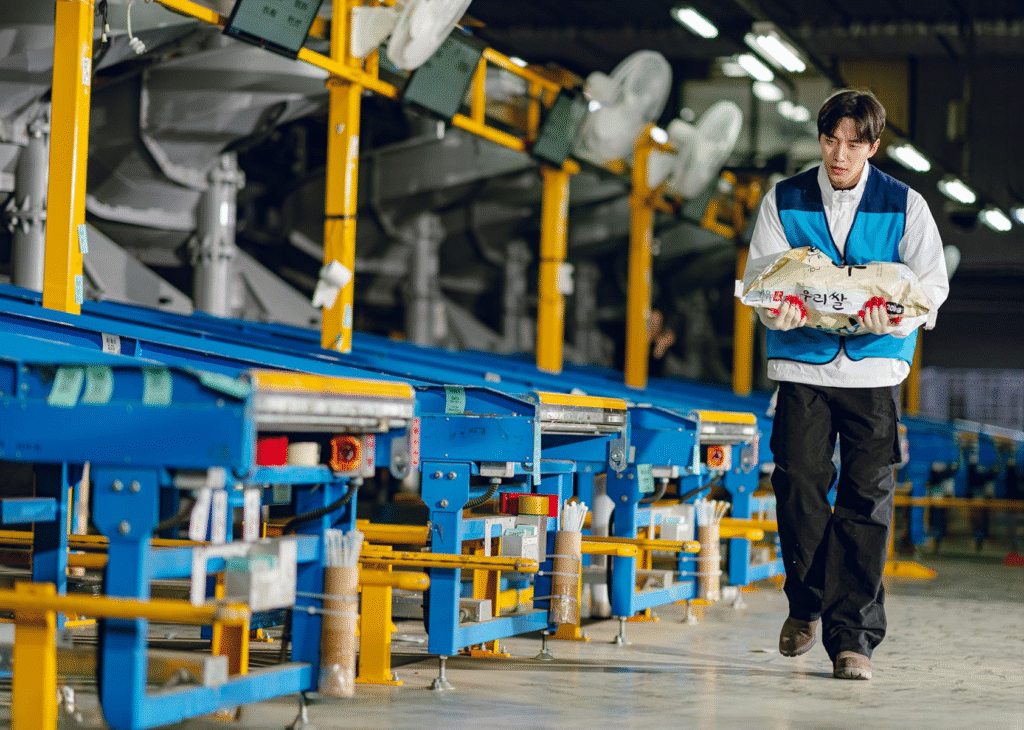
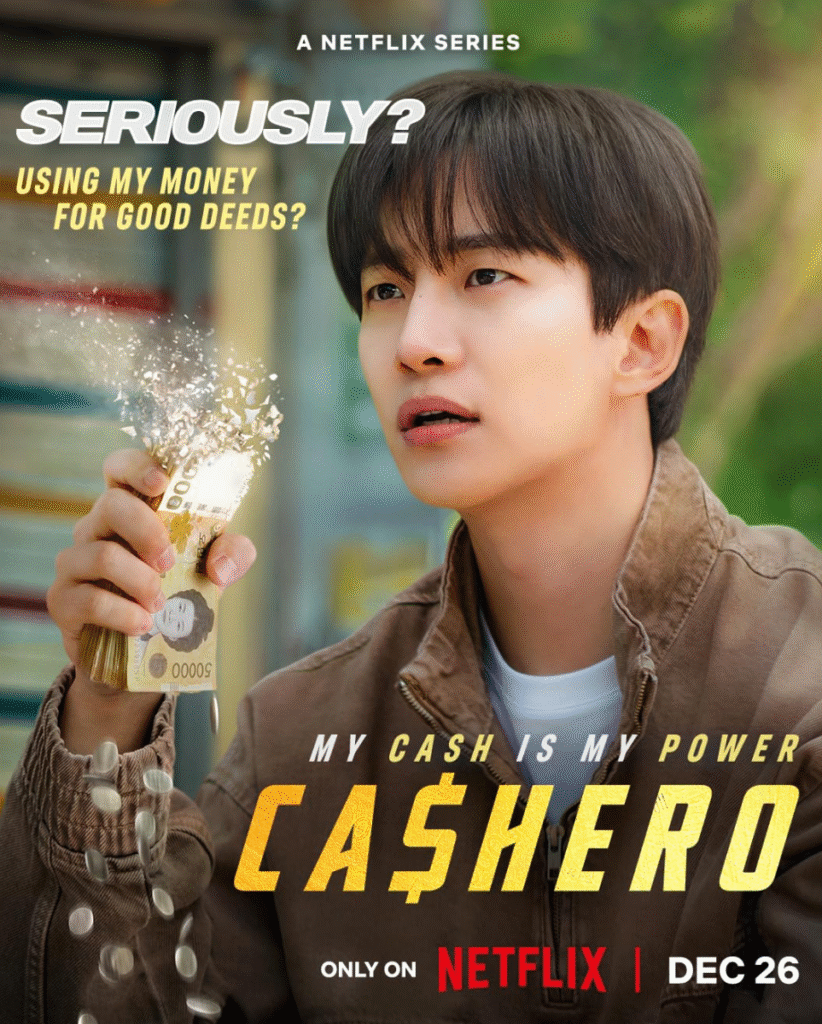
Sang-woong, played with a constant mix of exhaustion and stubborn idealism by Lee Junho, inherits an ability that turns physical banknotes into measurable strength.
The mechanics feel intentionally analog: no digital payments, no bank transfers—
only cash you can touch works.
This detail emphasizes how effort, sacrifice, and tangibility matter in a world where value often feels abstract. Cashero makes this rule central to its tension.
While other superhero narratives rely on destiny or tragedy,
Sang-woong’s power emerges from something much more familiar—
the act of earning, saving, and giving up.
His life becomes a cycle of charging up on payday and nearly collapsing by the end of each month, mirroring the burnout many people know too well.
The supporting cast deepens that realism:
a world-weary detective who’s seen too much,
residents who watch yet quietly support,
and a villain who believes abilities are commodities worth dissecting.
Together, they anchor the story beyond spectacle.

💥 Plot — “My Cash, My Strength, My Responsibility”
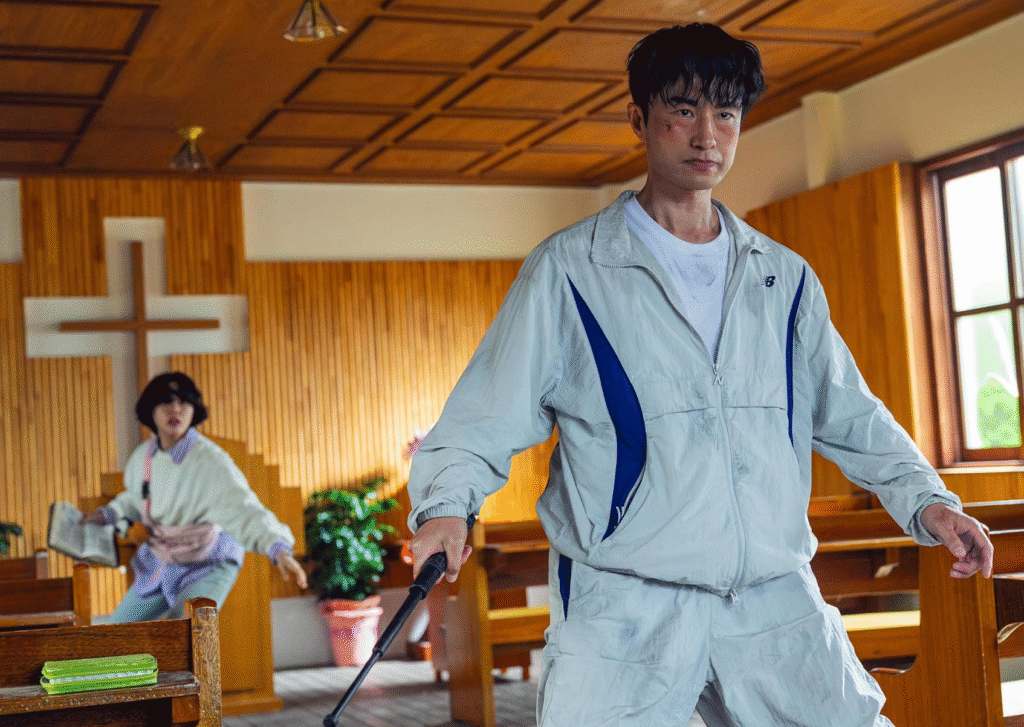
The drama’s tension doesn’t come from whether Sang-woong can win—
but whether he can afford to.
Each confrontation drains both his strength and his life’s savings,
forcing him to rethink what being useful truly costs.
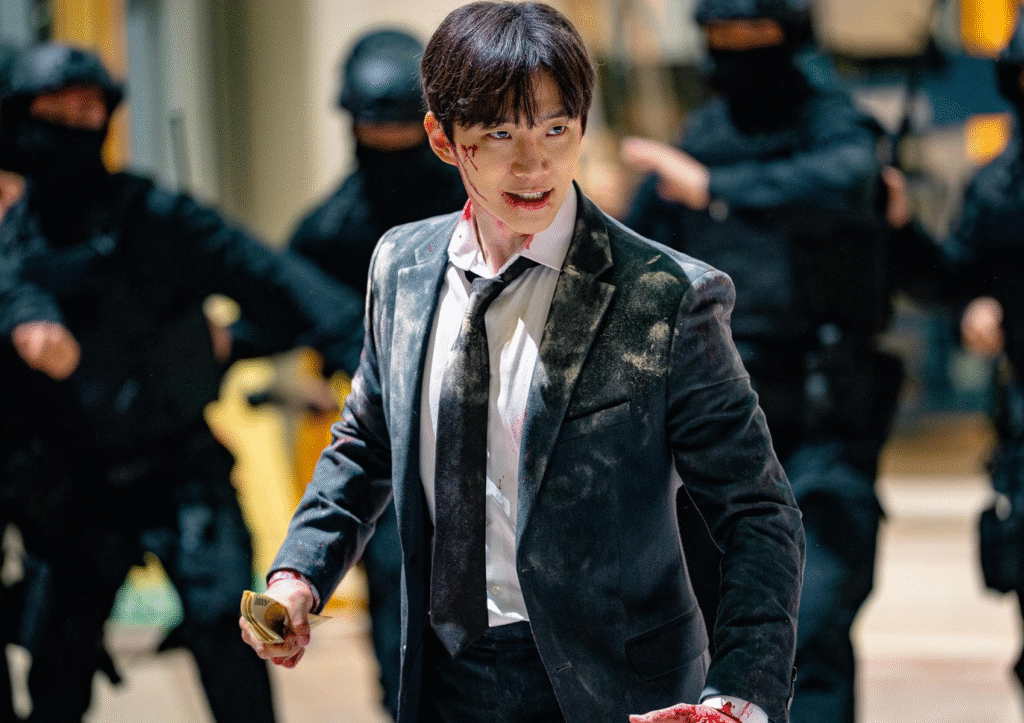
Jonathan, the antagonist, represents the opposite philosophy:
strength should be purchased, packaged, optimized, and sold.
To him, superpowered individuals are research material and potential revenue streams, not people.
His worldview turns ability into currency—not responsibility—and that moral divide shapes the conflict more than raw power ever could.
Sang-woong’s brief temptation to sell his ability for a fortune feels like one of the show’s most human moments.
He wants rest. He wants security.
But ultimately, he accepts that power without sacrifice has no weight,
and a life without conviction has no meaning.

🔚 Ending — When Cash Turns into Commitment (Spoilers)
The finale initially leans into tragedy:
Sang-woong and Jonathan both fall after a final confrontation,
suggesting the story will embrace the idea that every heroic act extracts a price.
But then we learn that Detective Hwang Hyun-seung holds a time-reversal ability—
not extravagant, yet frighteningly consequential.
With a small, almost casual gesture,
he rewinds the story so that a life spent doesn’t stay lost.
The reset is abrupt, but the emotional pivot is intentional:
rather than glorifying sacrifice, the show turns the spotlight to what communities can restore.
Jonathan spirals further into obsession, injecting himself to amplify his power,
while Sang-woong becomes powerless again—
not metaphorically, but literally out of cash.
The strongest hero is suddenly someone who cannot afford to lift a finger.
Then comes the show’s signature moment:
bills raining from windows, thrown by neighbors who never forgot what he did for them.
Those scenes stretch time—not through superpowers, but through emotion.
Each flying note is thanks, guilt, admiration, or simply recognition—
a collective push that turns bystanders into participants.
Sang-woong regains his strength, defeats Jonathan once more,
and returns home not as a legend, but as someone who finally understands why he fought.
The ending is clean, but the world remains open—
a rare balance in adaptations.

❓ Season 2 Potential — “A World That Still Has Work to Do”
The season concludes Sang-woong’s arc,
but the universe doesn’t feel resolved—it feels paused.
Loose ends and logical extensions:
- superhuman regulation bodies that barely stepped into frame
- other ability holders hinted but not yet explored
- and the unanswered question:
If money grants power, what grants return? Debt? Favor? Trust?
Because the system isn’t tied to genetics or destiny,
another protagonist could rise without invalidating Sang-woong’s story.
A season focused on abilities that cost something other than cash
—time, memory, luck—could evolve the theme without repeating it.

📝 Final Thoughts — “Power That Counts the Hearts, Not the Bills”
Beneath its quirky setup, Cashero asks a persistent question:
What is the price of doing the right thing—and who pays it?
The show’s most memorable visual—
citizens throwing cash toward a falling hero—
isn’t about wealth but acknowledgment.
The money gives Sang-woong strength,
but the gesture gives him purpose.
Where many superhero stories end with applause,
Cashero ends with something quieter and heavier:
a reminder that no one becomes strong alone.
If Season 2 arrives, I hope it explores
not just who becomes powerful—
but who helps them stay that way.

Official Streaming & Verified Resources
Official Streaming & Production
https://www.netflix.com/title
Original Webtoon Source
https://page.kakao.com/content/48013608?tab_type=overview
Cast Profiles & Credibility Links
https://www.imdb.com/title/tt30413044/?ref_=nv_sr_srsg_0_tt_4_nm_4_in_0_q_casher
https://en.wikipedia.org/wiki/Lee_Jun-ho
Related Reviews from Go K Wave
Made in Korea Powerful Episodes 1–2 │ Ambition Ignites
https://gokwv.com/made-in-korea-review-episodes-1-2/
The Price of Confession Ending — Full Review + Ending Breakdown
https://gokwv.com/the-price-of-confession-ending-explained-review/